
William T. Plass Award
This award is the highest honor the Society has and recognizes those in research, teaching, outreach, and administration. The award is given to a person who has distinguished themselves in the field of disturbed ecosystem reclamation at the local, regional, national, and international levels.
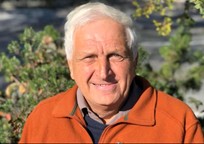
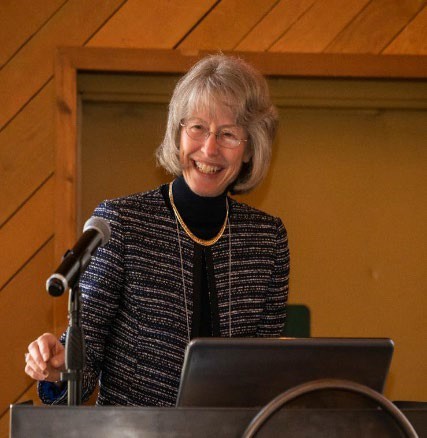
Peter Beckett
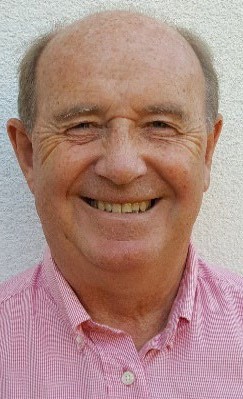
Peter Beckett has a PhD in wetland ecology from King’s College London (London, UK). With 50 years of service at Laurentian University (Sudbury, ON, Canada), Beckett is now a professor emeritus of environmental reclamation, restoration, and wetland ecology in the School of Natural Sciences and a senior fellow at the Vale Living with Lakes Centre. He loves plants, especially mosses and lichens. Beckett is a longtime chair of VETAC, the City of Greater Sudbury’s Advisory Panel on Landscape Regreening. He is a founding member and director of the Junction Creek Stewardship Committee, which is dedicated to returning ecological integrity to the Sudbury urban creek. Beckett, with numerous graduate students, has worked on reclamation projects on many mine sites and around smelter locations across northern Ontario. He participates with colleagues from several universities on peatland restoration projects in Sudbury and has taught courses at the undergraduate and graduate level in restoration ecology, reclamation science, plant ecology and biostatistics, wetland ecology, and other botanical topics.
Beckett has been the president and director of the Canadian Land Reclamation Association (CLRA) and holds a Noranda Award for outstanding achievements in reclamation. The CLRA awarded him the Watkin Award for Reclamation in 2016, and he has received a Pioneers in Reclamation Award from ASRS. Beckett is an honorary member of the China Land Reclamation Society. He leads numerous field trips for local, national, and international visitors to local wetlands, forests, and restored and reclaimed sites. Beckett has given numerous invited presentations on and participated in conferences discussing aspects of the Sudbury Regreening Protocol and wetland ecology worldwide, including in Canada, the United States, Peru, Chile, Hong Kong, Australia, China, Russia, the United Kingdom, and other European countries. In May 2025, he received a King Charles III Coronation Medal for services to community reclamation.
As an outdoor enthusiast, Beckett serves on the Board of Rainbow Routes, Sudbury’s trail Association. He has promoted cross-country skiing and snowshoeing with the BioSKI club in the Lake Laurentian Conservation Area for more than 50 years.



2013
- Dr. Neil Humphries, Blakemere Consultants Ltd
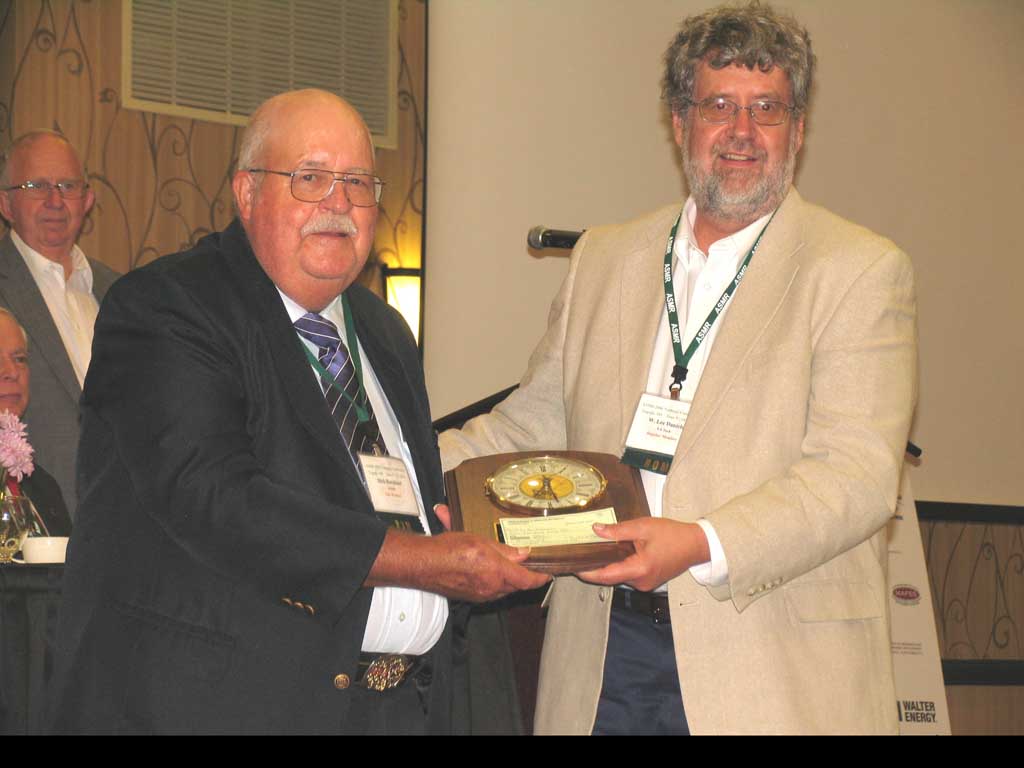
2011
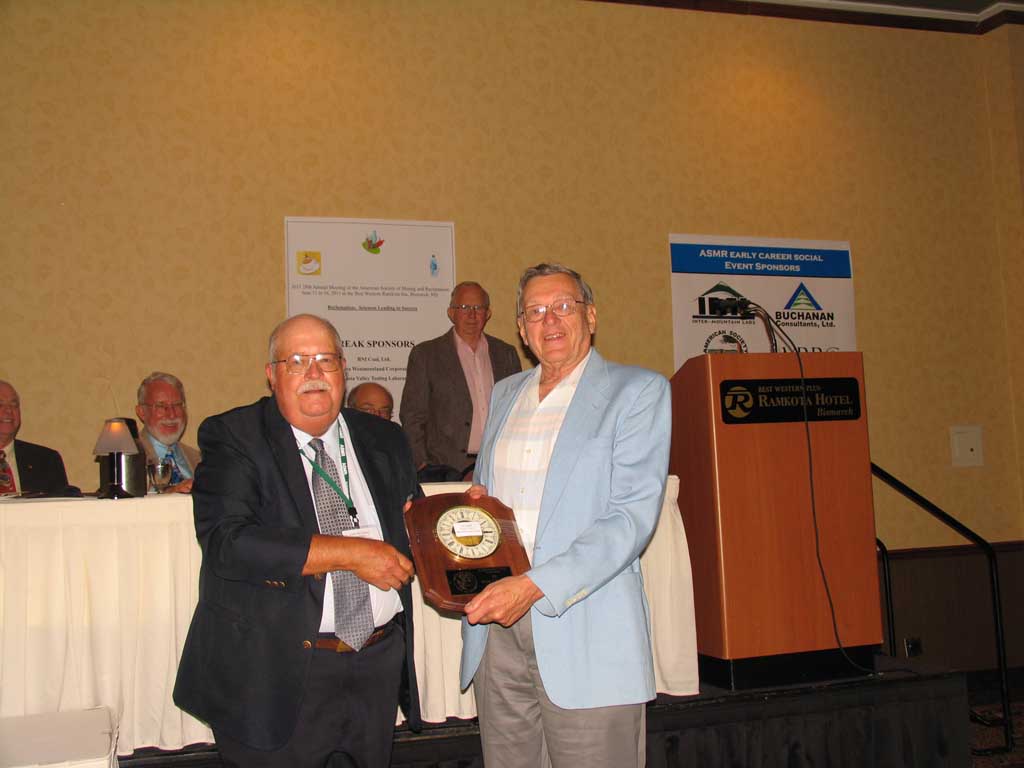
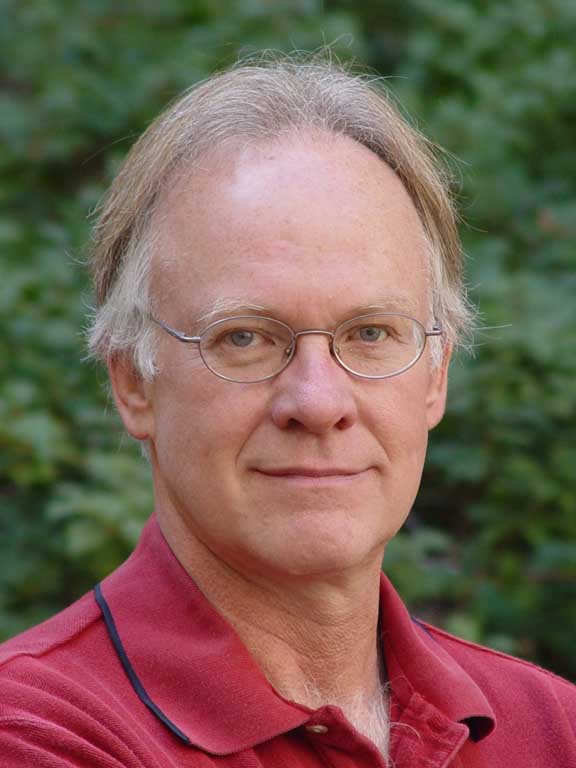
2009
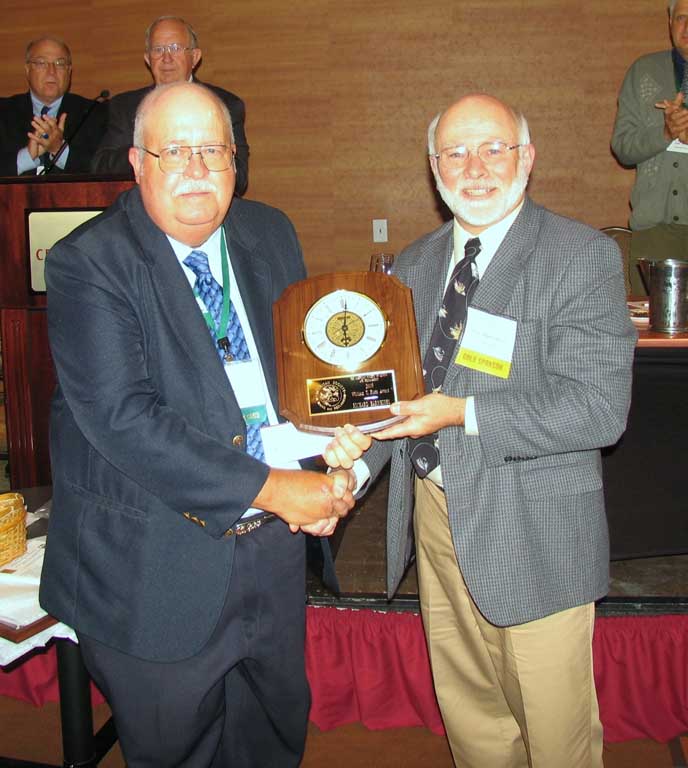
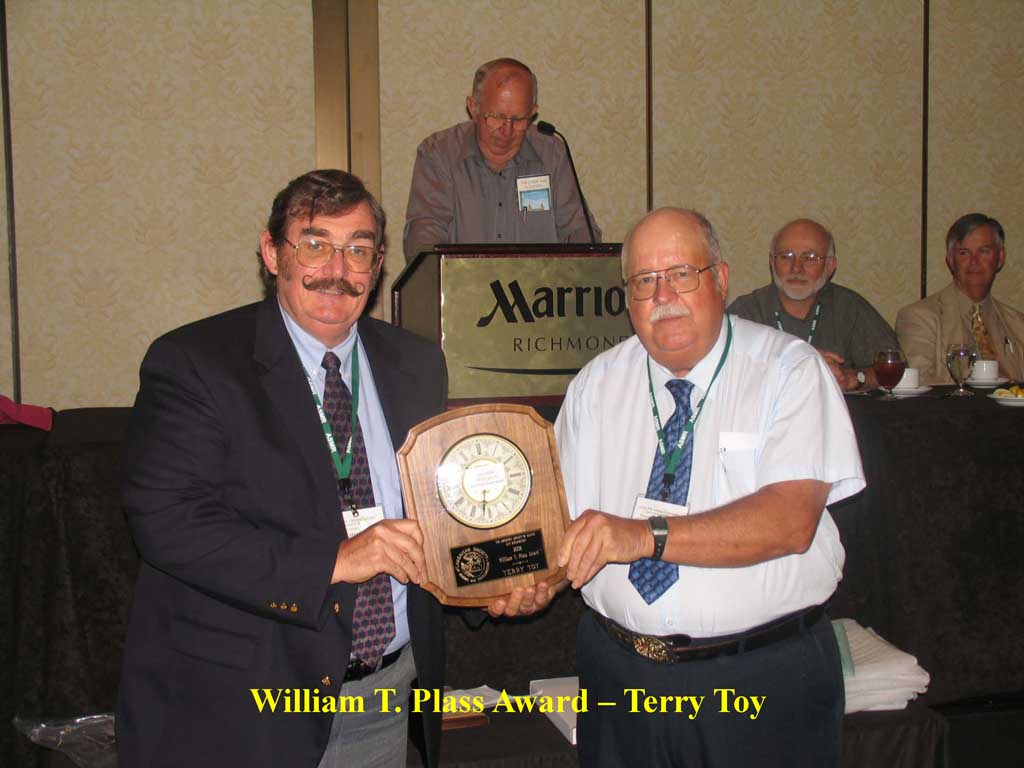
2006
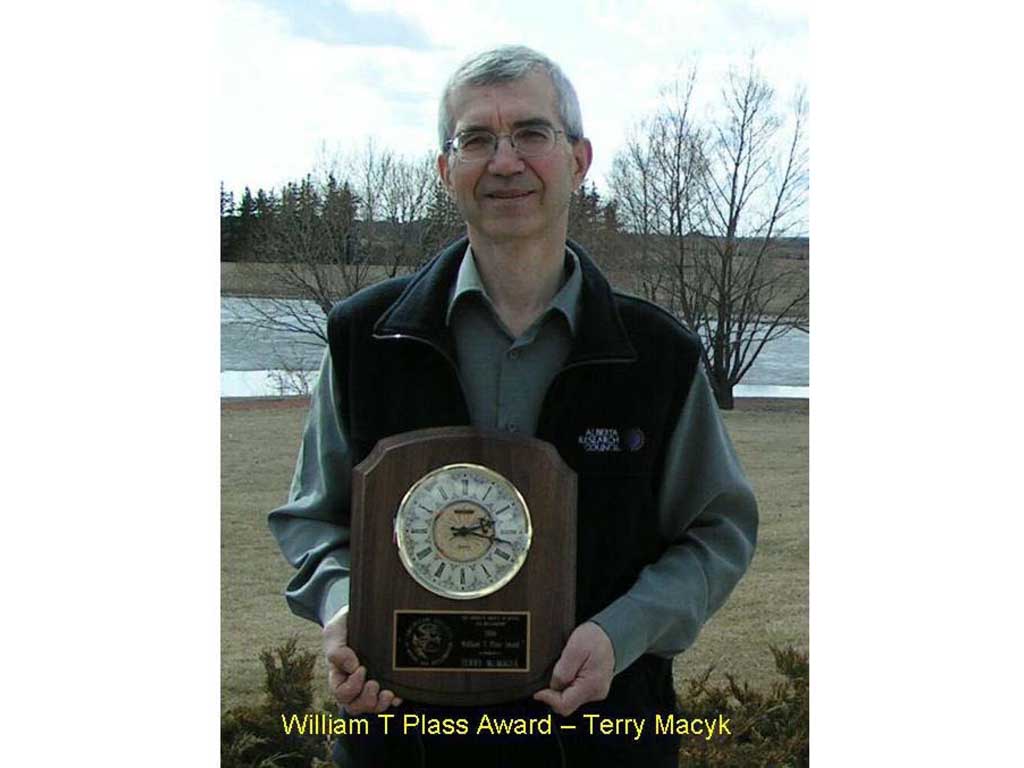
2005
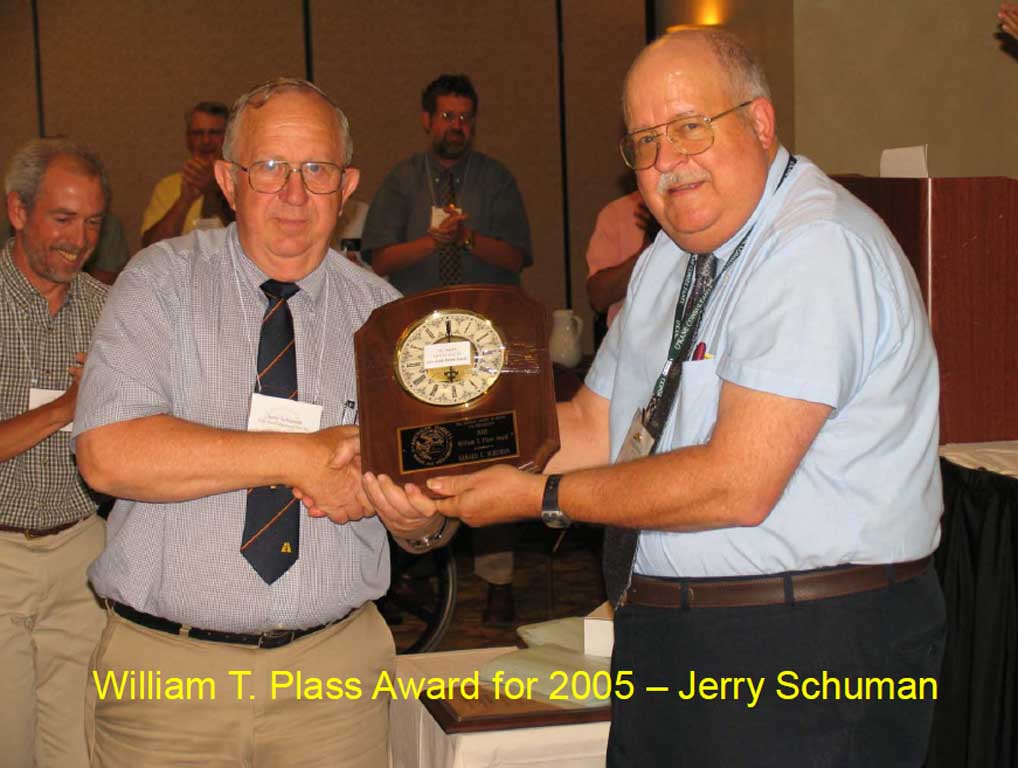
2004
- Dr. Robert Kleinmann, U.S. Dept. of Energy, NETL, PA
2003
- Dr. John C. Sencindiver, University of West Virginia
2002
- Dr. Ronald E. Ries, U.S.D.A.—ARS (Retired)
2001
- Mr. Richard L. White, Texas Utilities, Dallas, TX
2000
- Dr. James A. Burger, Virginia Tech, Blacksburg, VA
1999
- Mr. Joe D. Friedlander, Coteau Properties, ND
1998
- Dr. Gerald L. Lowry, Stephen F. Austin College (Retired)
1997
- Dr. James De Ment, Consultant
1996
- Mr. Alten Grandt, Peabody Coal Co. (Retired)
1993
- Dr. Frank T. Caruccio, University of South Carolina
1992
- Dr. William E. Sopper, Pennsylvania State University
1991
- Dr. William C. Ashby, Southern Illinois University
1990
- Mr. Benjamin C. Greene, West Virginia Mining & Reclamation Assoc.
Richard I. & Lela M. Barnhisel Reclamation Researcher of the Year Award
The Richard I. and Lela M. Barnhisel Reclamation Researcher of the Year award recognizes substantial contributions to the advancement of reclamation science and technology through scientific research.

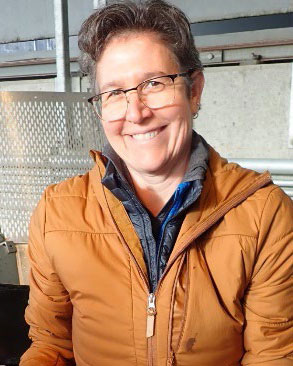
Sara Klopf
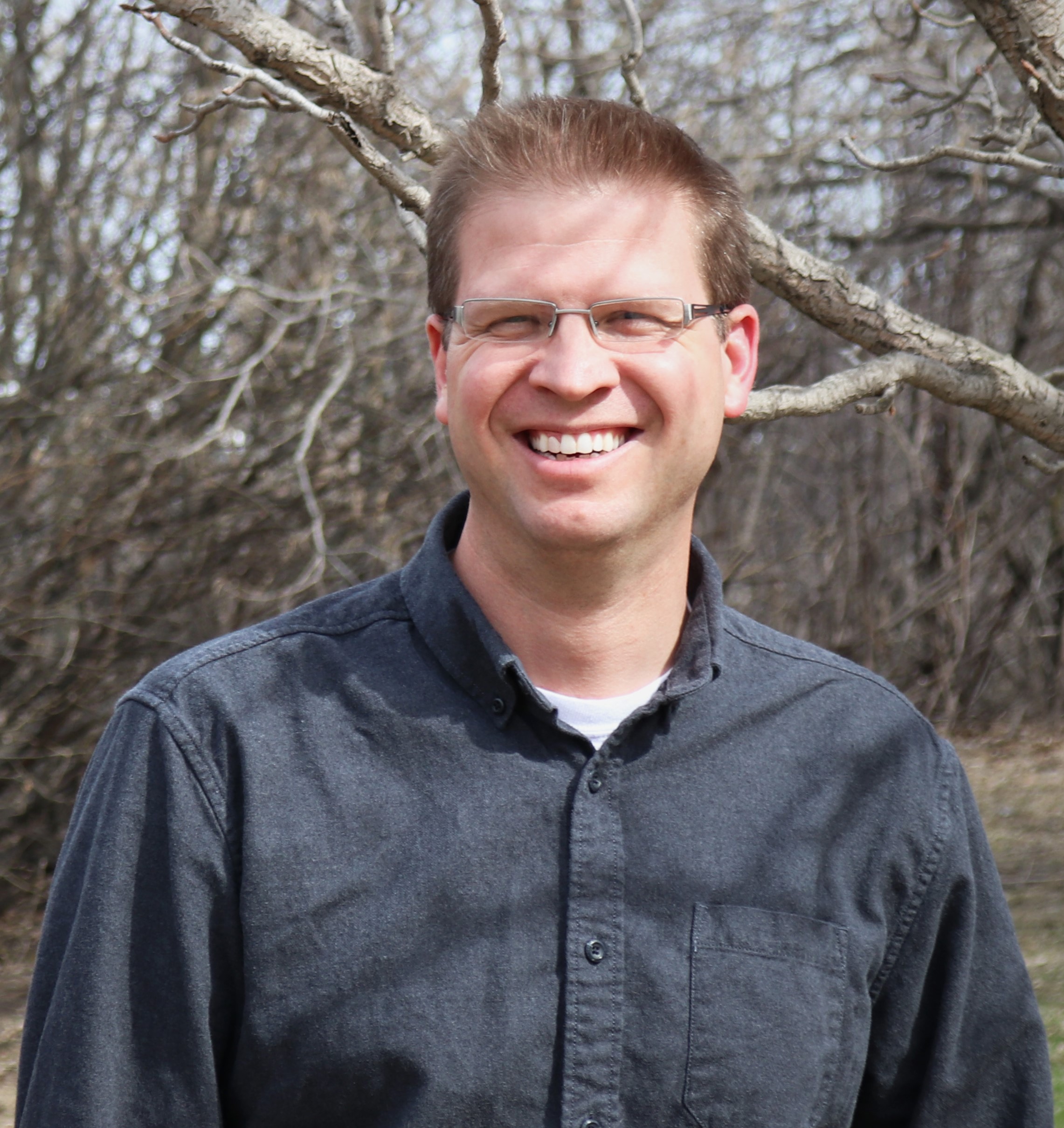
Sara Klopf earned a BS from the University of Illinois Urbana-Champaign in integrative biology and an MS in plant biology from Southern Illinois University Carbondale, where she studied peatland reclamation after oil sands mining in northern Alberta. While continuing to work full time, she is also currently pursuing a doctoral degree at Virginia Tech studying the effects of mine soil reconstruction practices on soil properties, vegetation establishment, and hydrologic regimes. Since 2012, she has worked at Virginia Tech, where she works on projects related to revegetation and reforestation of coal, sand, and gravel, and heavy mineral sands mines; urban forestry and bioretention; forest genetics; American chestnut restoration; investigation of a novel autumn olive pathogen; and assessment of utility-scale solar development impacts. Her first American Society of Mining and Reclamation/American Society of Reclamation Sciences meeting was in Laramie, Wyoming, in 2013. She has served two terms on the National Executive Committee, is an associate editor for Reclamation Sciences, and currently co-chairs the Wild Women of Reclamation. When she’s not working, she’s most likely found in the garden or on a hiking trail with her husband and five-year-old son.



2012
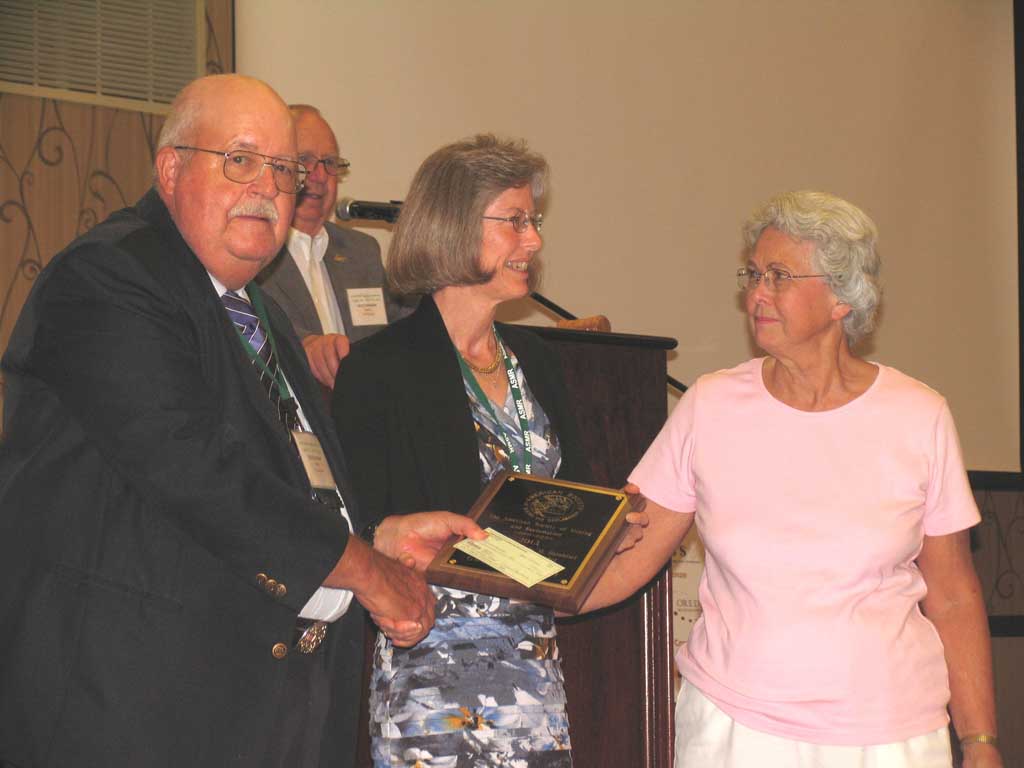
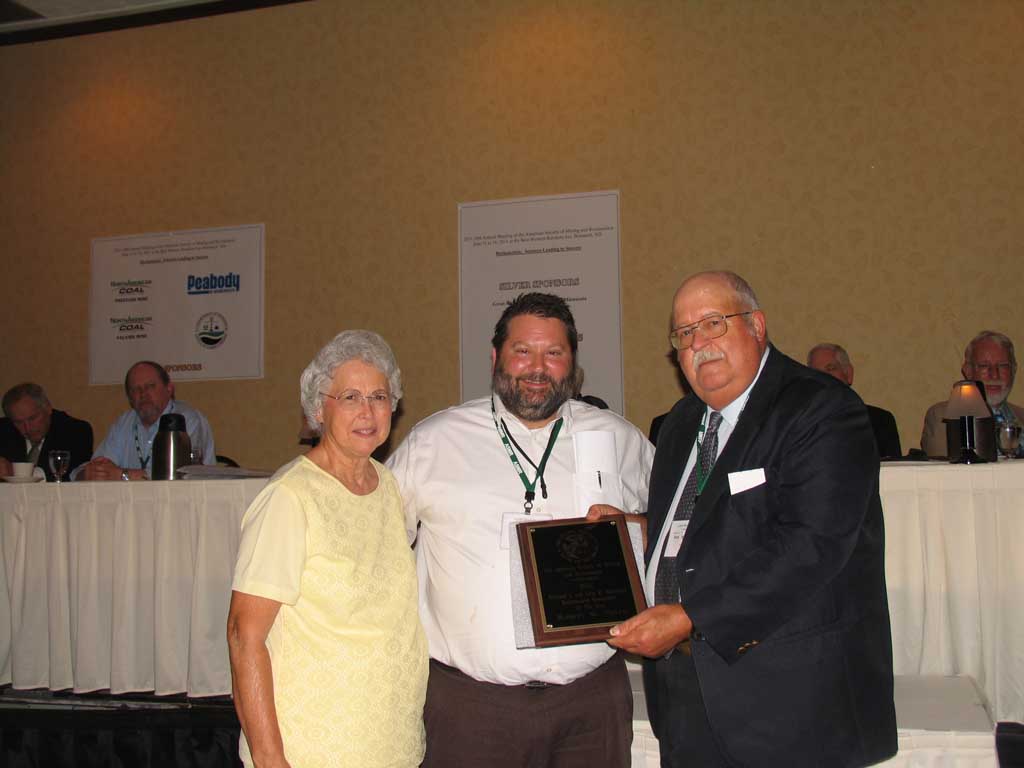

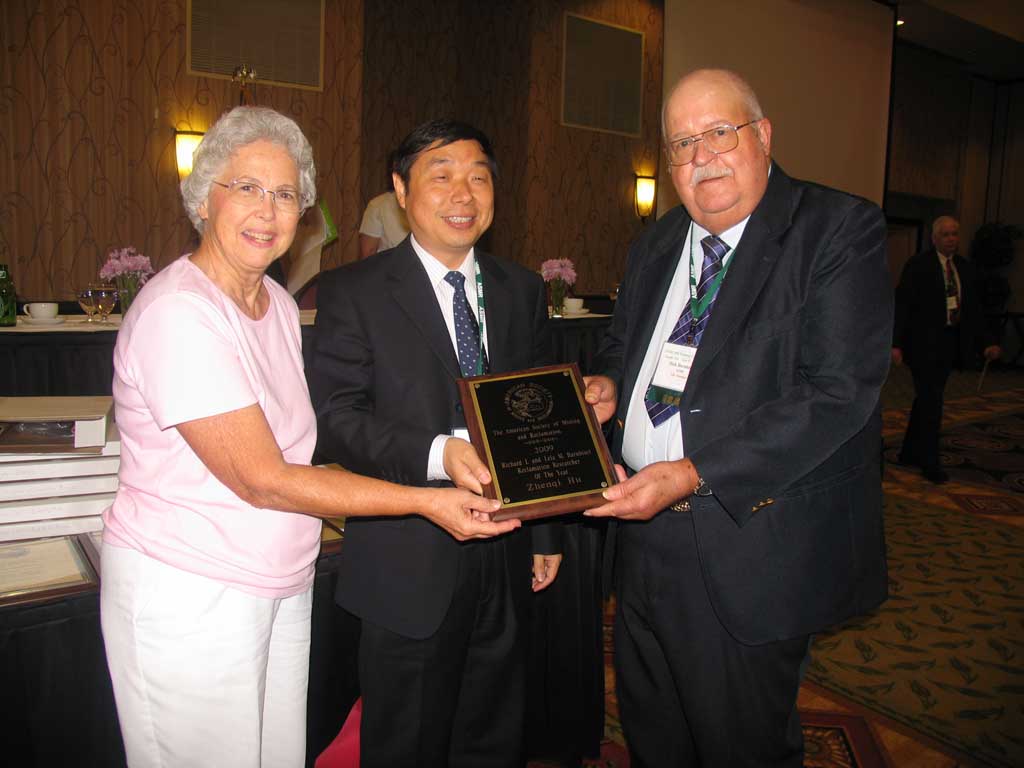
2009
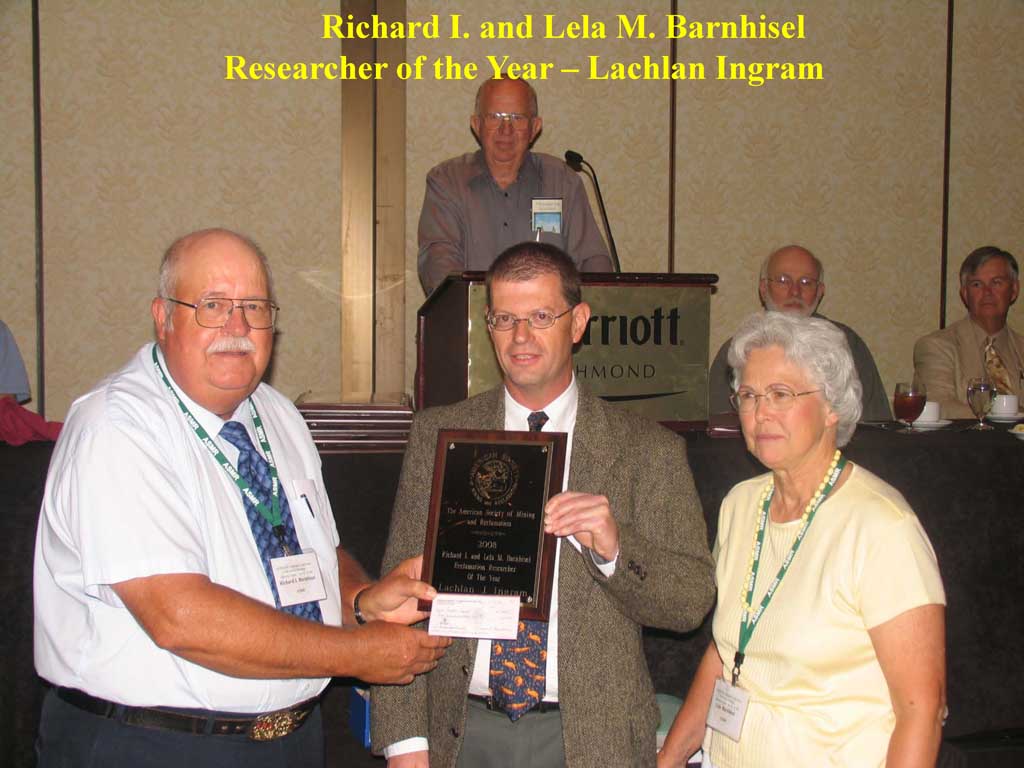
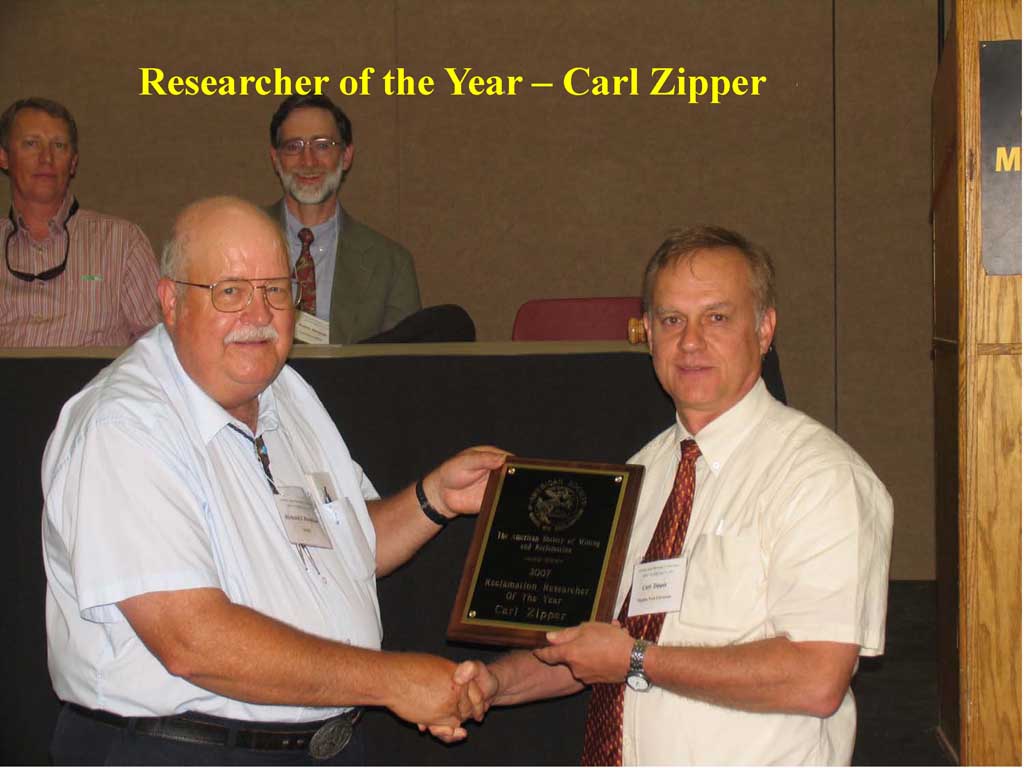
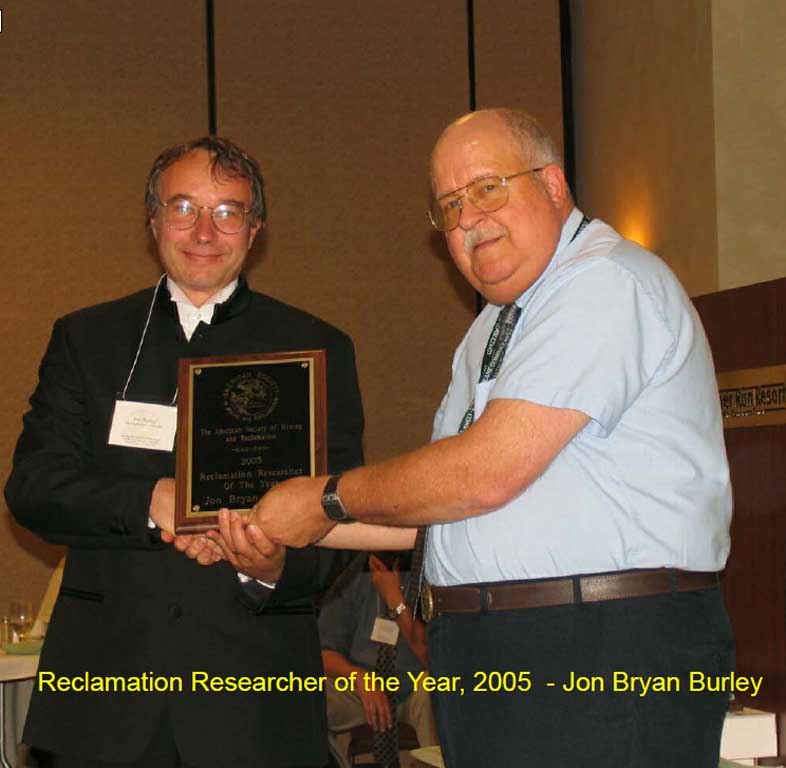
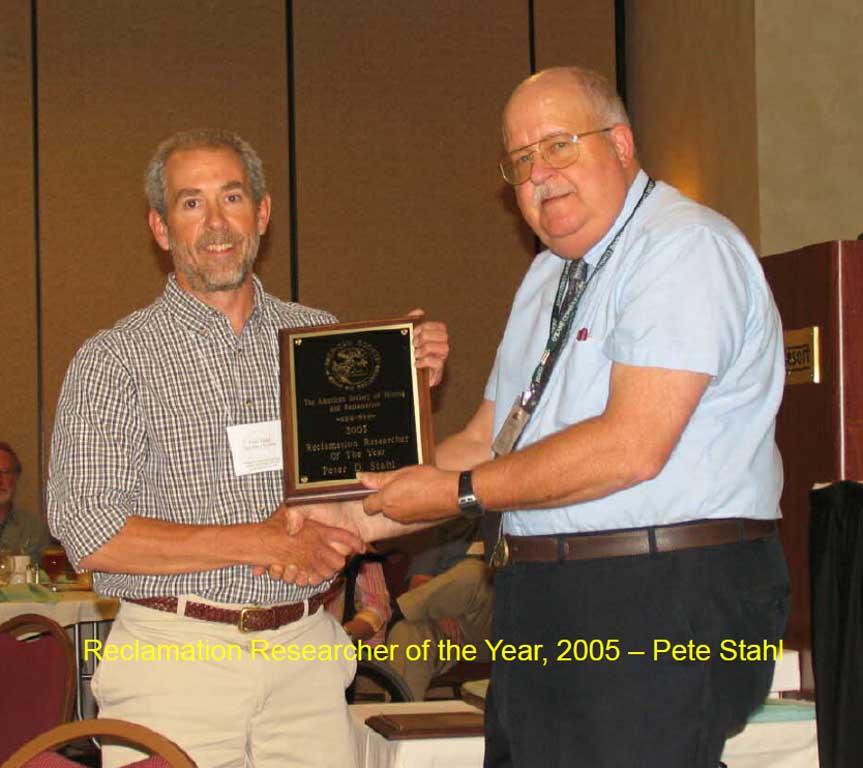
2005
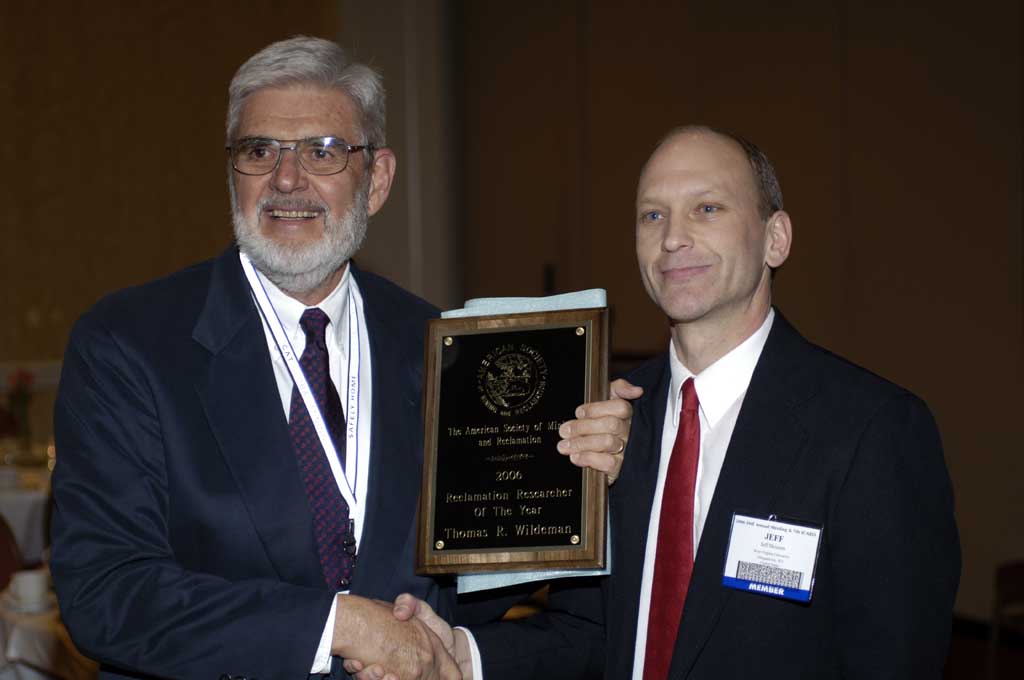
2003
- Dr. Michael Collins, University of Kentucky
2002
- Dr. Terrence J. Toy, University of Denver
2001
- Dr. Lloyd R. Hossner, Texas A. & M. University
2000
- Mr. Martin Y.P. Fung, Syncrude Canada Ltd., AB, Canada
1999
- Dr. Jeffrey G. Skousen, West Virginia University
1998
- Dr. George Vance, University of Wyoming
1997
- Dr. Stephan A. Schroeder, No. Dakota Public Service Commission
1996
- Mr. Jack Nawrot, Southern Illinois University
1995
- Dr. Gary Halvorson, North Dakota State University
1994
- Mr. Terry M. Macyk, Alberta Research Council
1993
- Dr. W. Lee Daniels, Virginia Polytechnic Institute and State University
1992
- Dr. Frank F. Munshower, Montana State University
1991
- Dr. Gerald E. Schuman, Agricultural Research Service
1990
- Ms. Patricia M. Erickson, U.S. Bureau of Mines
1989
- Dr. Richard I. Barnhisel, University of Kentucky
1988
- Dr. Edward J. DePuit, University of Wyoming
1987
- Mr. Thomas G. Zarger, Tennessee Valley Authority (Deceased)
1986
- Mr. Willis G. Vogel, U.S. Forest Service (Retired)
1985
- Dr. Richard M. Smith, West Virginia University (Retired)
1984
- Dr. Ronald E. Ries, Agriculture Research Service
Reclamationist of the Year Award
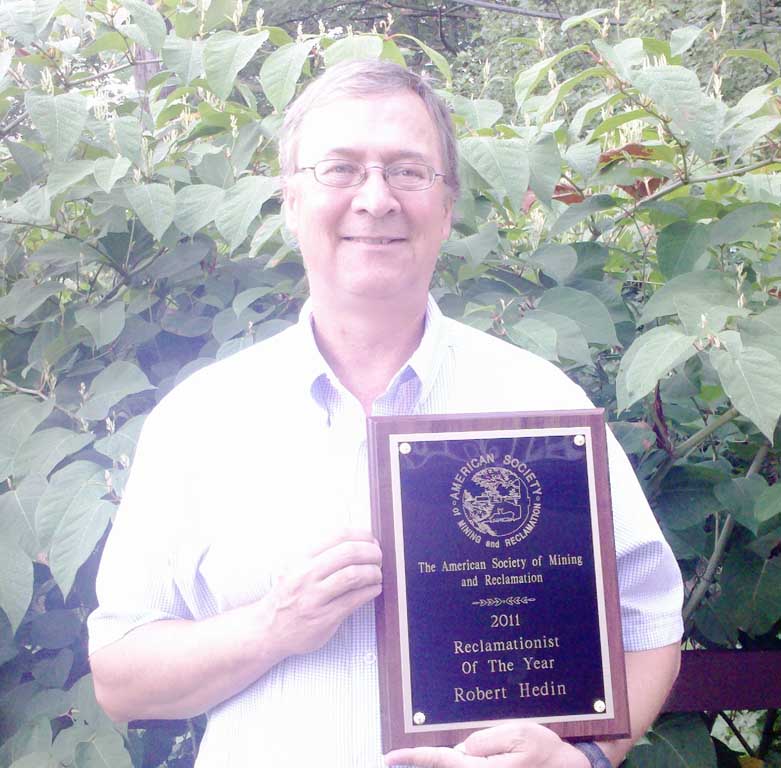
The Reclamationist of the Year award recognizes individuals demonstrating outstanding accomplishments in the practical application or evaluation of reclamation technology. It also rewards individuals responsible for implementing innovative practices or designs for new reclamation strategies.

Jasmine Allison
Jasmine Allison is the director of government and regulatory affairs for PureWest Energy. With nearly 20 years of experience in the oil and gas industry, she has held a wide range of environmental and regulatory roles with companies including Shell, Ultra Resources, and PureWest, building deep expertise at the intersection of policy, operations, and environmental stewardship.
She holds a degree in environmental management, is National Environmental Policy Act certified, and is a licensed drone pilot, providing a strong technical foundation for her work. Her many years of hands-on experience advancing projects reflect her longstanding commitment to environmentally responsible and sustainable energy development. Throughout her career, Allison has focused on advancing effective reclamation and a wide range of environmental practices and initiatives across the West, particularly in Wyoming.
Allison currently serves as chair of the Public Lands and Legislation Committee for the Western Energy Alliance and co-chairs the Operational Integrity Committee for the American Exploration & Production Council. She also serves on the Wyoming Governor’s Working Group for the Sublette County Antelope Herd Migration Corridor and is a member of the board of directors for the Petroleum Association of Wyoming. She is known for advocating for practical, real-world solutions and bringing a thoughtful, holistic approach to complex regulatory and environmental challenges.




2015
2012
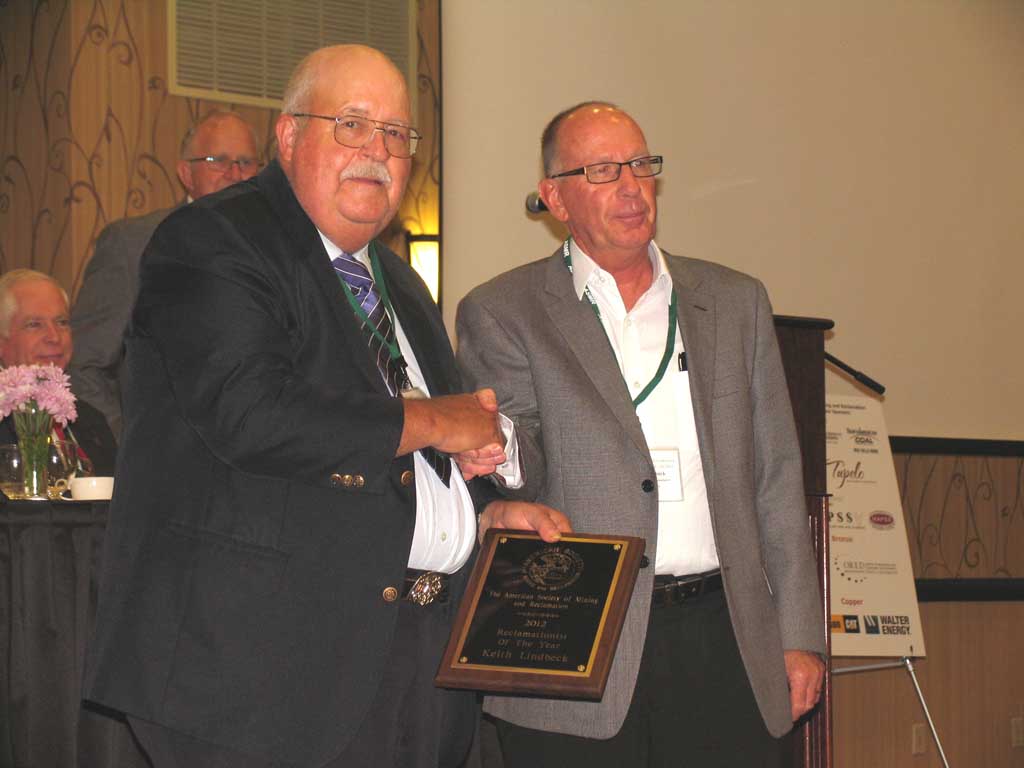
2011
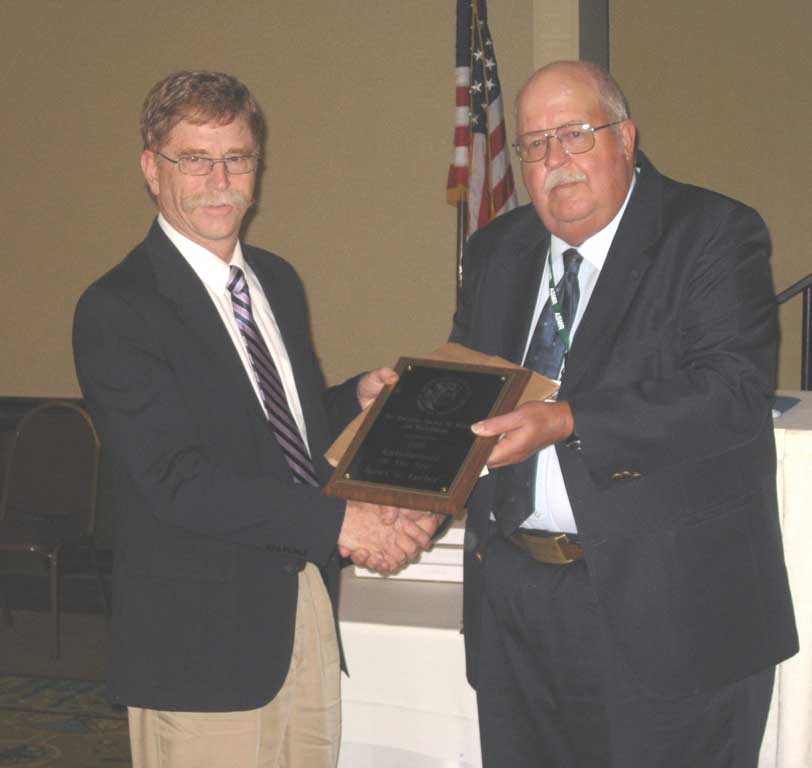
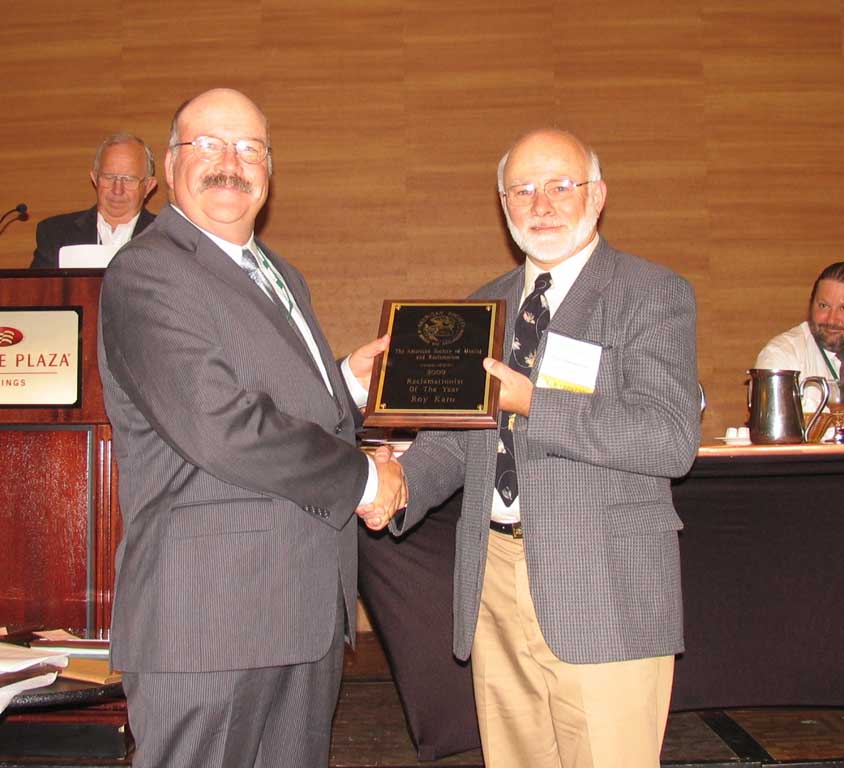
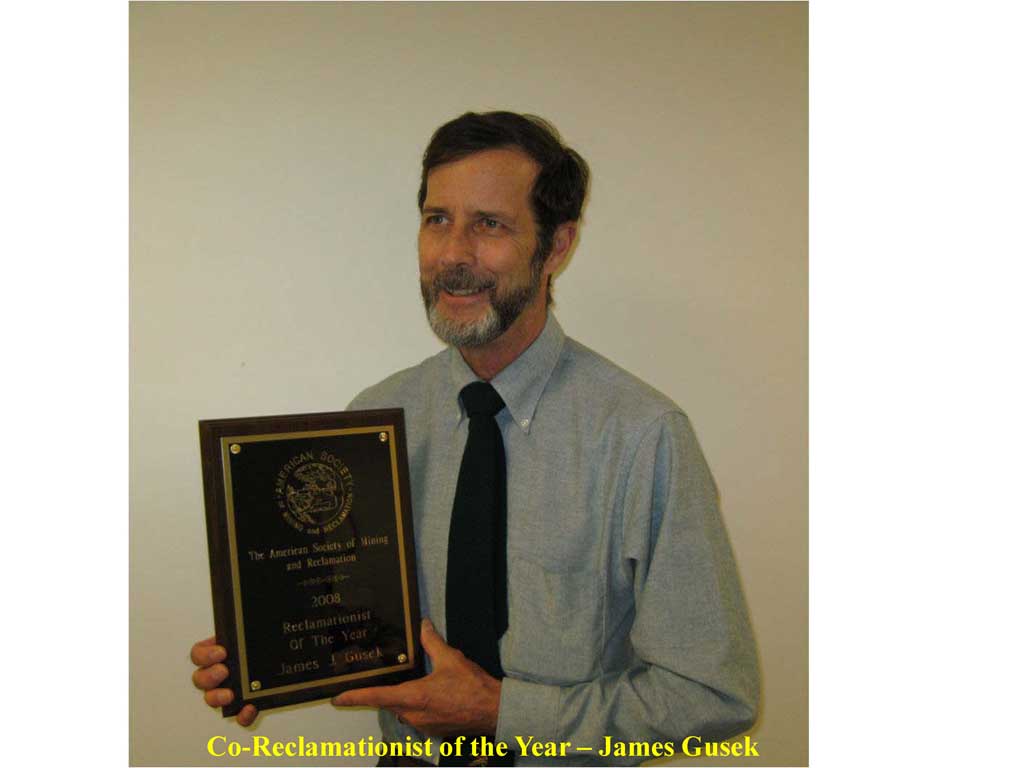
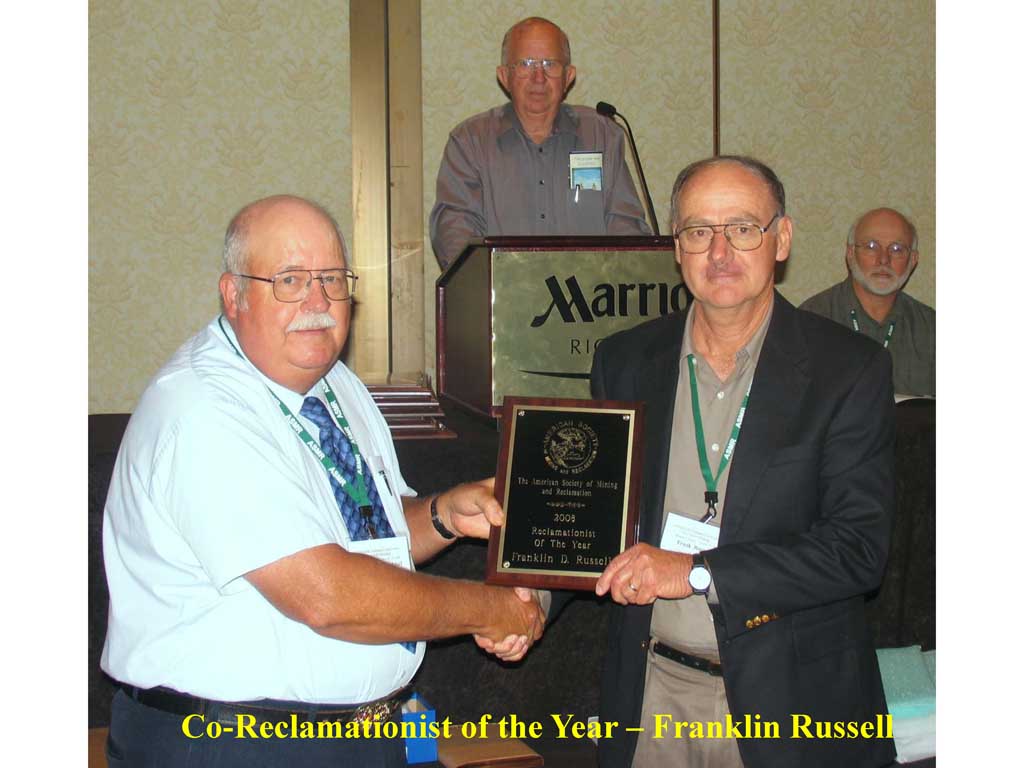
2008
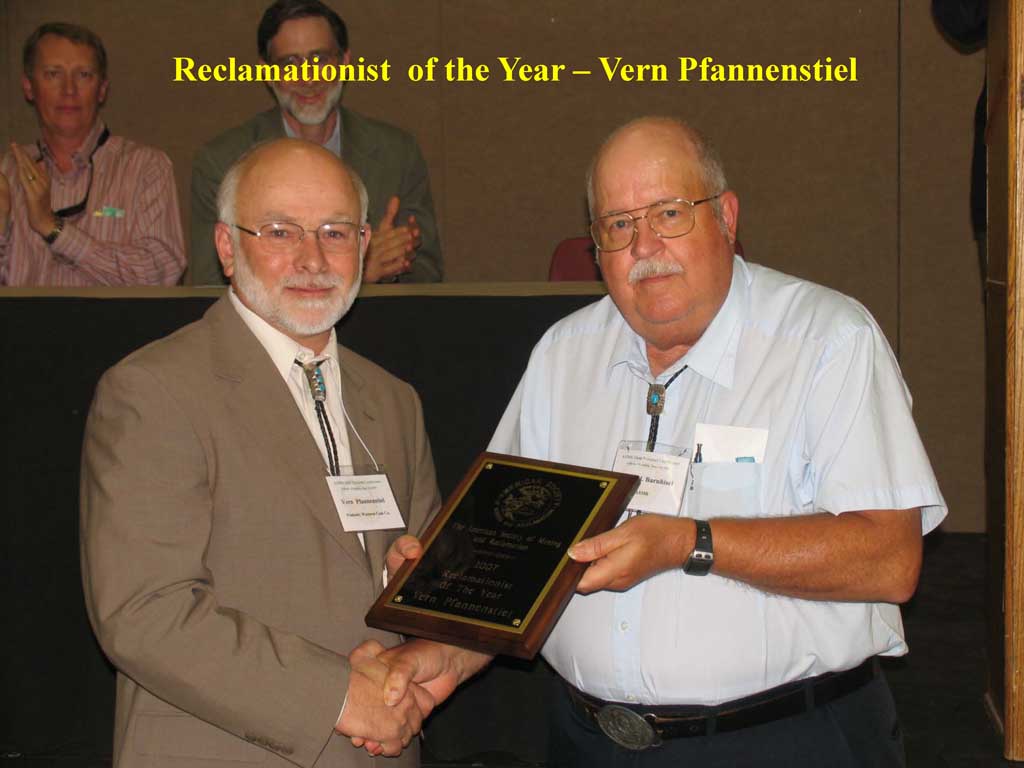
2007
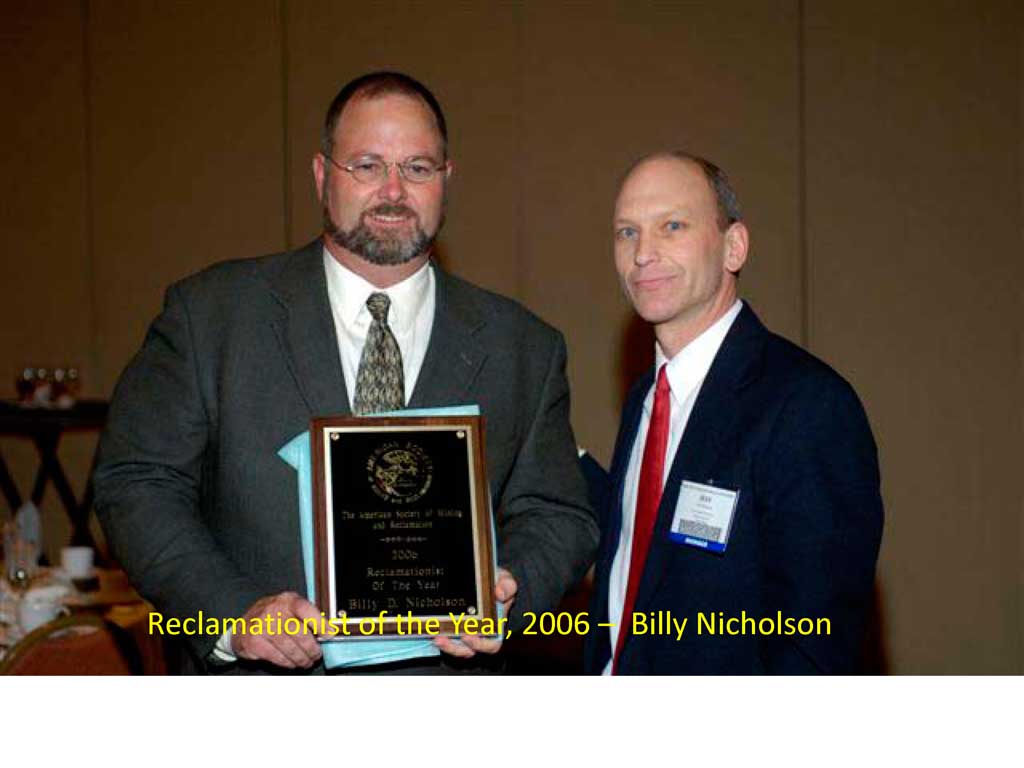
2005
- Mr. William R. Kirk, Coteau Properties Co., ND
2004
- Mr. Scott E. Belden, Powder River Coal Co., Gillette, WY
2003
- Mr. Clint Skilbred, Glenrock Coal Co. Glenrock, WY
2002
- Ms. Margaret H. Dunn, Stream Restoration, Inc., Cranberry Twp., PA
- Ms. Laurel E. Vicklund,, Belle Ayr Mine, Gillette, WY
2001
- Mr. Tim Ramsey, BHP World Minerals, La Plata Mine, La Plata, NM
2000
- Mr. Reginald Hoff, Big Sky Coal, Peabody, Colstrip, MT
1998
- Mr. Wayne R. Erickson, Habitat Management, Inc.
1997
- Mr. Stuart A. Bengson, ASARCO Inc., Copper Operations, AZ
1996
- Mr. Darryl Maunder, Kerr-McGee Coal Company
1995
- Mr. Brent Gray, Peabody Coal Company
1994
- Mr. Dave Nilson, Basin Electric Power Cooperative
1993
- Mr. Robert Moore, Thunder Basin Coal Company
1992
- Dr. David S. Ralston, Amax Coal Company
1990
- Mr. David C. Porterfield, Carbon Coal Company
1989
- Mr. Dwight Hicks, Drumond Coal Company
1988
- Mr. Jack A. Muncy, Tennessee Valley Authority
1987
- Dr. Thomas H. Peters, International Metals (Retired)
1986
- Mr. Kenneth Spurlock, Kentucky Reclamation Association (Retired)
1985
- Mr. Alten F. Grandt, Peabody Coal Company (Retired)
1984
- Mr. James White, Pioneer Fuel Company (Retired)
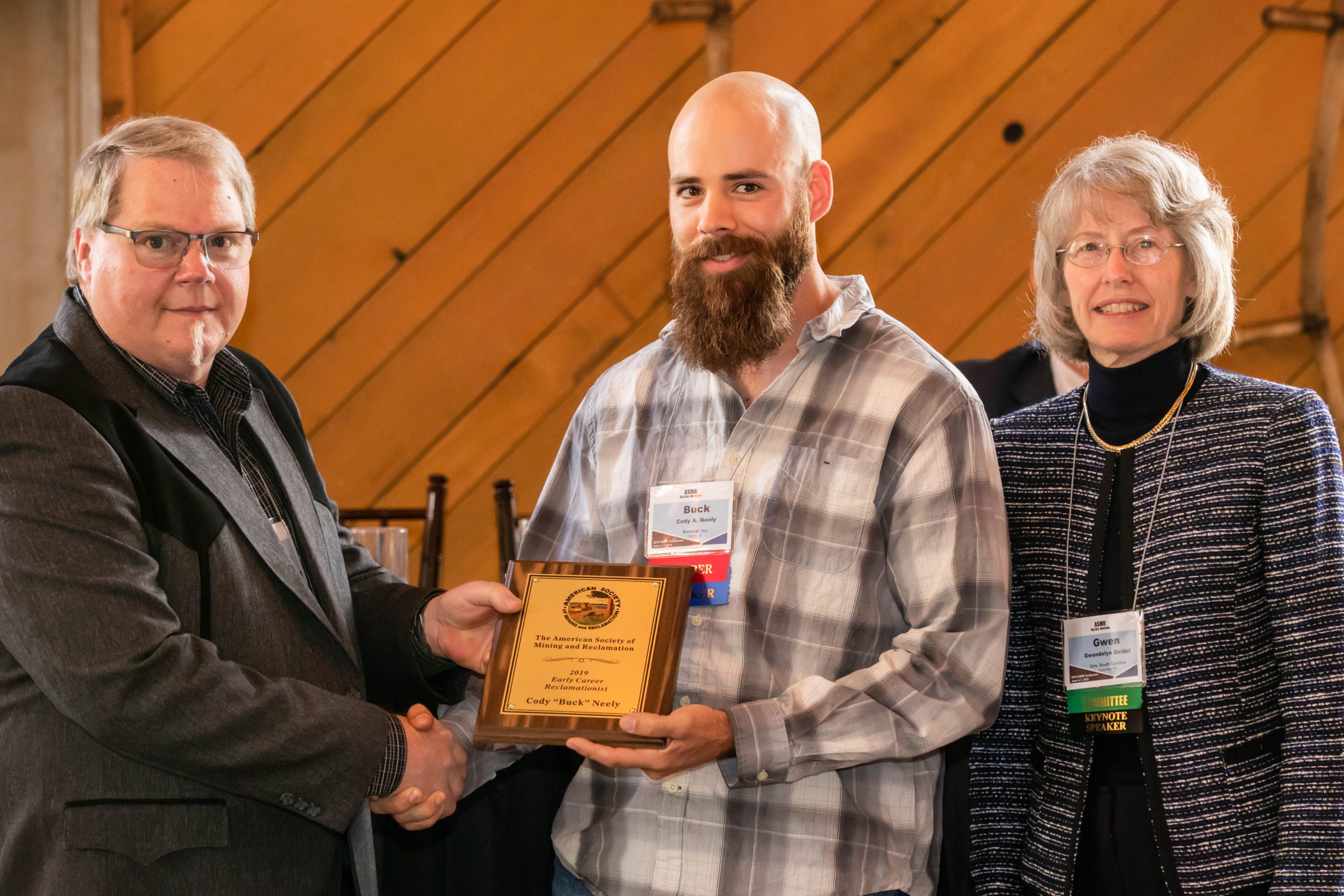
Early Career Award
This award is intended to recognize an early career member of ASRS that is involved in reclamation research, teaching, and/or on-the-ground reclamation practices within academics, regulatory oversite or in an industry position.
The nominee must have been employed in their field for a minimum of three years but not more than ten years

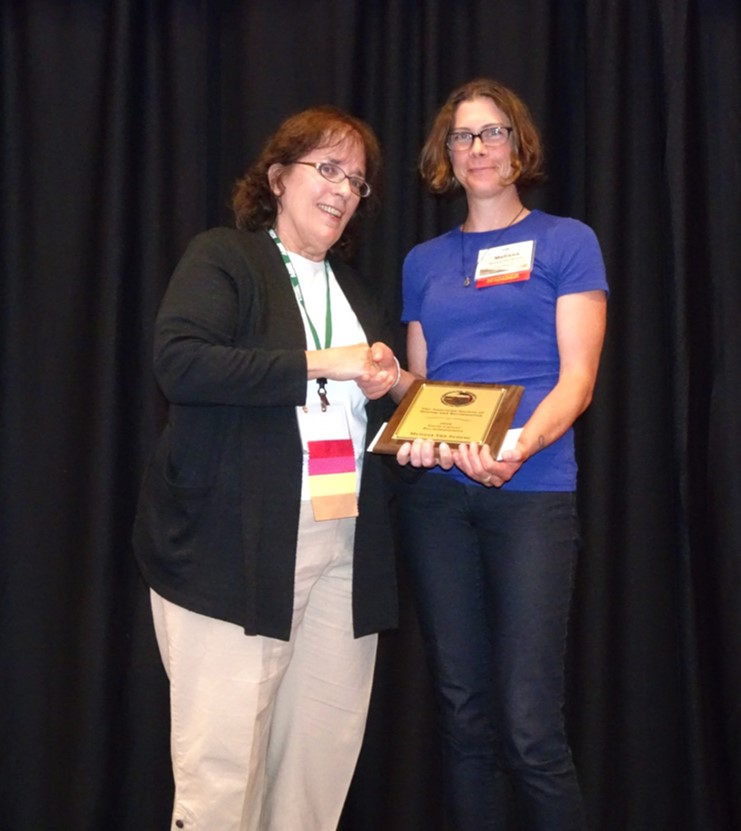
Hannah Angel
Hannah Angel, PhD, is a lecturer in the Department of Forestry and Natural Resources and the director of undergraduate studies for the Natural Resources and Environmental Science (NRES) program at the University of Kentucky’s (UK) Martin-Gatton College of Agriculture, Food and Environment. A UK alumna, she returned to her alma mater after earning an MS from Stephen F. Austin State University and a PhD from Virginia Tech. Angel leads instruction for a range of introductory and upper-level courses, where she integrates professional development into the NRES curriculum. Her research background in reclamation science—spanning surface mines in East Texas, the Central Appalachians, and Virginia’s Upper Coastal Plain—informs her pedagogy. Her doctoral work was focused on analyzing temporal and spatial trends in the physical and chemical properties of mine soil in Virginia. By leveraging nearly a decade of field and laboratory experience, she helps students navigate complex environmental problems through restoration-based solutions. Angel is dedicated to mentoring the next generation of environmental professionals in her current position at UK.





Pioneer of Reclamation Award
This award is presented to an individual that has had significant impact and influence in the field of environmental science and reclamation relating to disturbed ecosystems over their entire career.

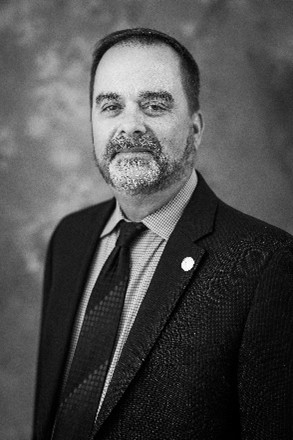
Ron Schreibeis
Ron Schreibeis has been involved in the field of reclamation and revegetation across the western United States for over five decades. He received a bachelor of science in agricultural economics and a master of science in range management from the University of Wyoming. Early in his career, Schreibeis focused his energy on quantifying environmental conditions in pre-mining landscapes, focusing on vegetation, to establish a scientific baseline for restoration efforts.
To not only meet but exceed reclamation standards, Schreibeis founded Rocky Mountain Reclamation, a company that rose to prominence under his leadership. His innovative spirit led to the invention of specialized equipment designed to enhance revegetation outcomes, setting new benchmarks in the industry. Schreibeis attributes much of the company’s success to the unwavering dedication of his Rocky Mountain Reclamation team and the collaborative partnerships forged with clients.
Throughout his career, his energies focused on advancing reclamation technology and restoring native rangelands. Schreibeis assisted in shaping reclamation practices, guiding engineering and environmental consulting firms and mining companies through complex revegetation challenges. His involvement is reflected in numerous pre-ASRS symposium presentations by others and the authorship of many revegetation procedure documents and manuals, adopted by engineering companies, consultants, mines, municipalities, and states.
Now enjoying semi-retired life with family, friends, and his involvement in his hobbies, community, and church, he continues to lend his experience in revegetation planning, seed mixture design, weed control, and wetlands management while maintaining strong ties with the new owners of Rocky Mountain Reclamation LLC.
Schreibeis hopes his legacy is one of innovation, leadership, and an enduring commitment to environmental stewardship.
Kyle J. Wendtland
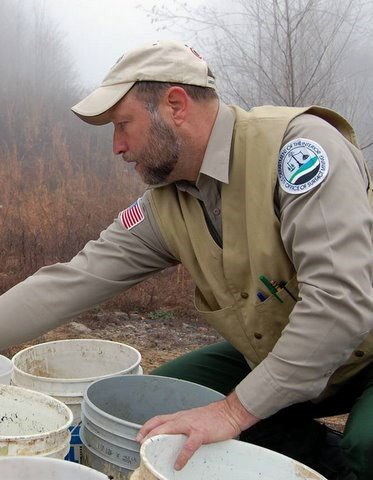
Kyle J. Wendtland is the deputy director and interim acting director of fossil fuel development for the Wyoming Energy Authority. He previously served as the Wyoming Department of Environmental Quality Land Quality Division Administrator. Prior to this, he was an environmental engineering manager for the coal industry. Wendtland has held a wide range of environmental and engineering positions and has extensive experience in mining and mineral extraction. He began his career with the Montana Department of State Lands in 1991, moved to private industry in 1993, and then to the Wyoming Department of Environmental Quality in 2015. Wendtland holds a master of science and bachelor of science in range management with a focus in disturbed land reclamation from the University of Wyoming. He has been recognized for his contributions to the mining industry and for advancing reclamation science at the state and national levels. He resides in Cheyenne and grew up in Casper and Dubois, Wyoming.




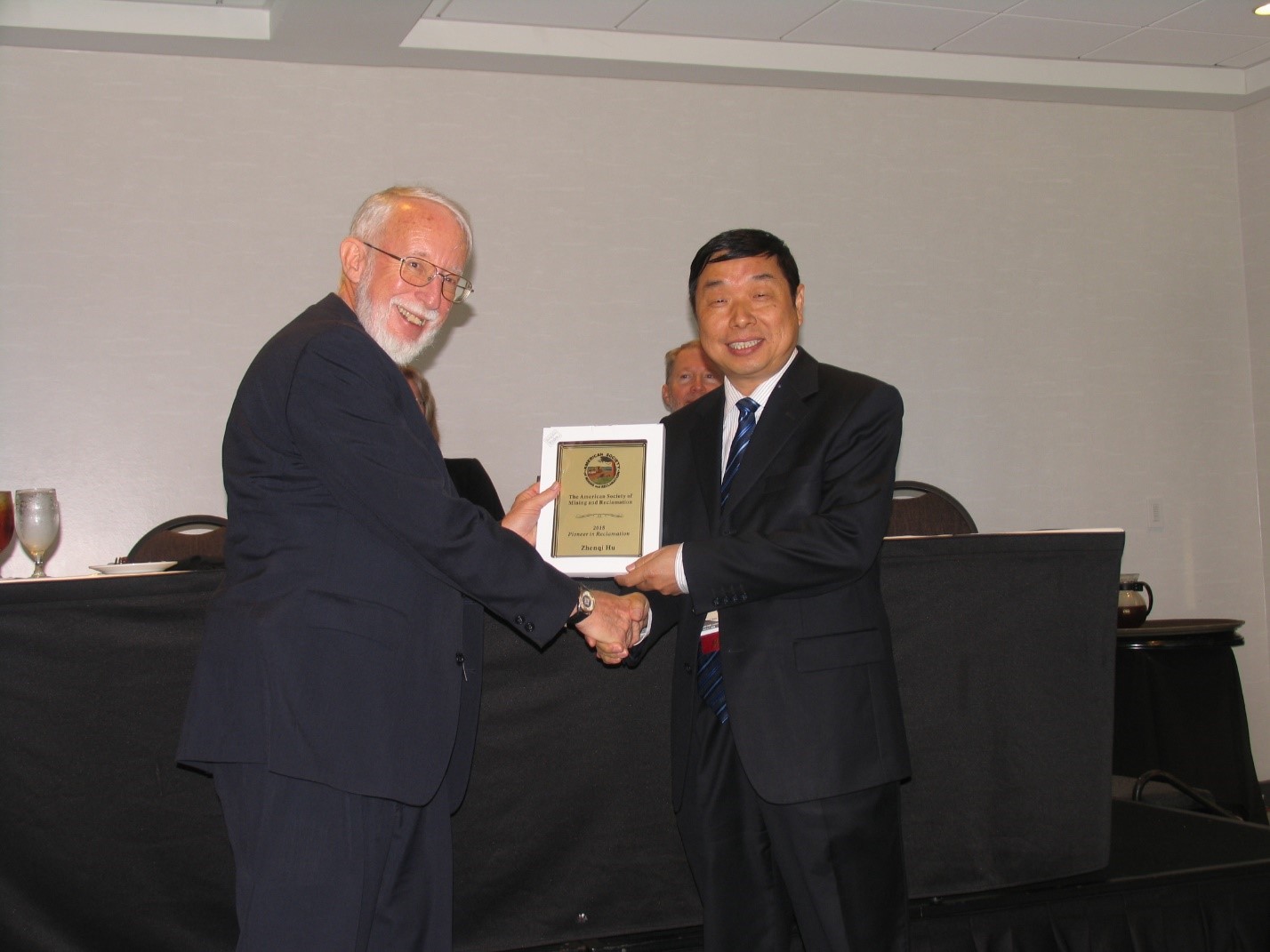
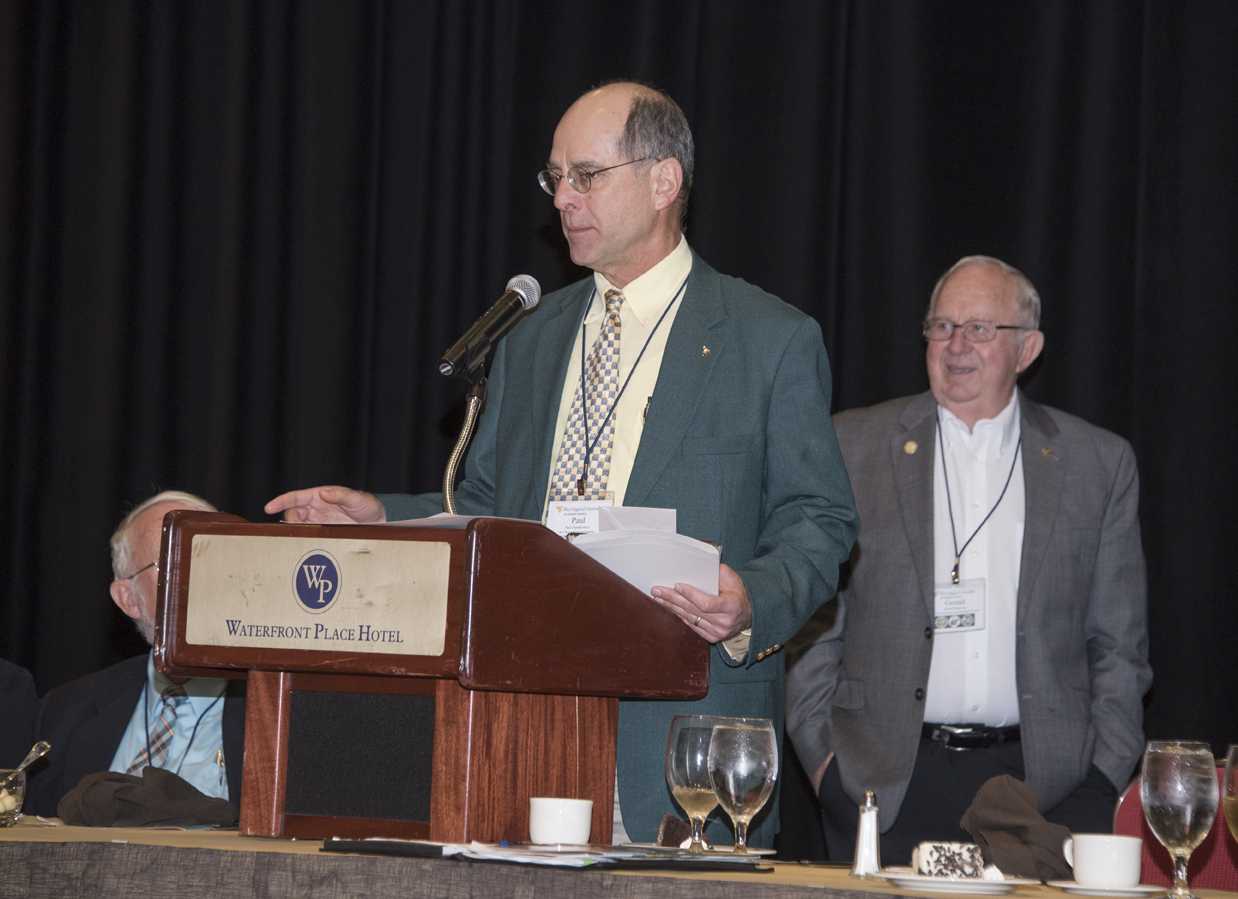
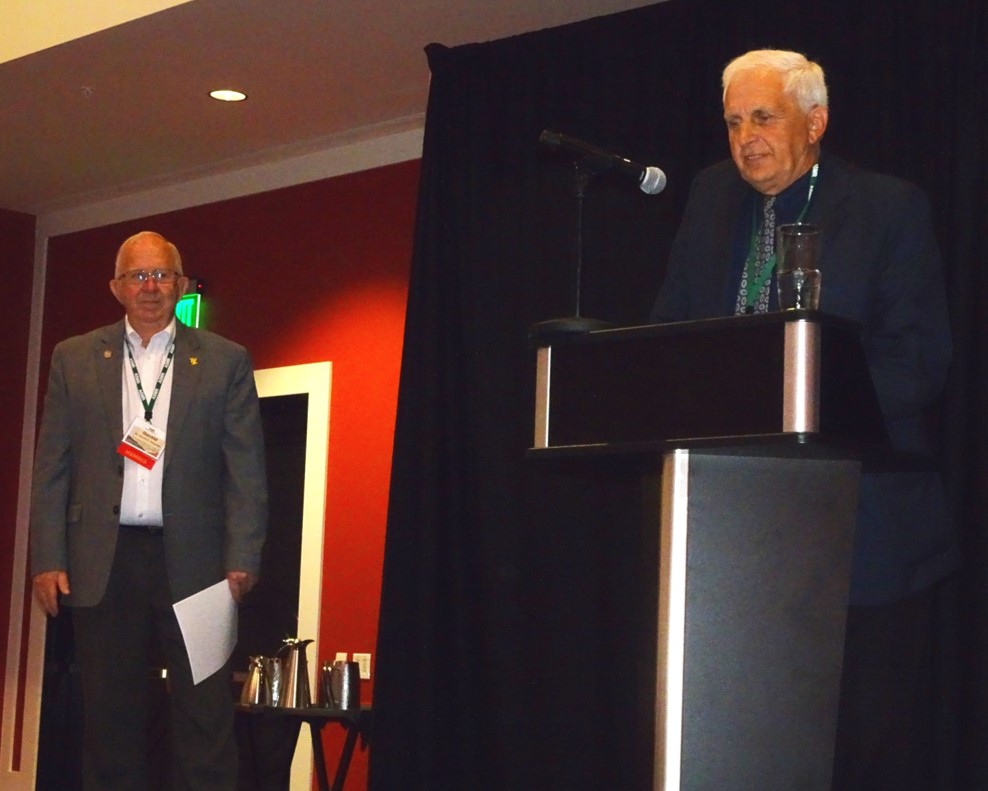
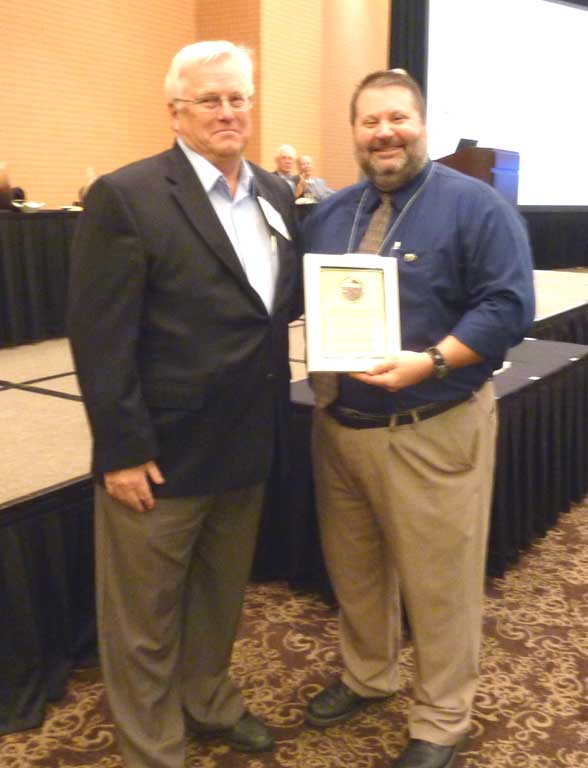
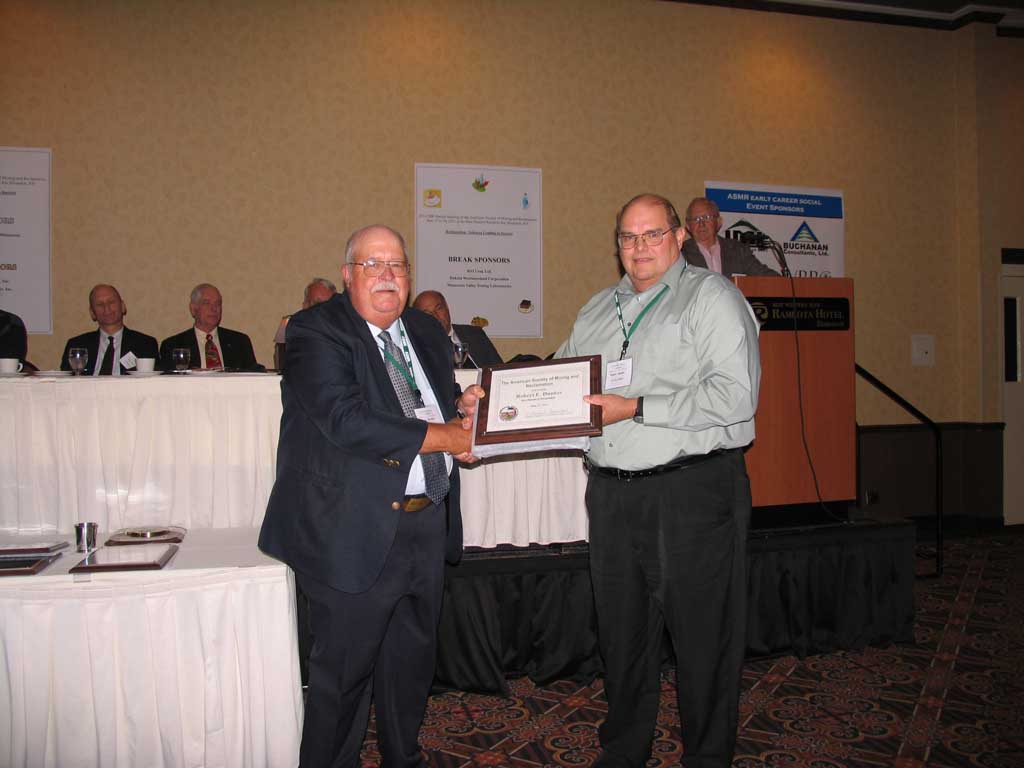
2005
- Terry Macyk
- Martin Fung
2004
- Sy Brayley
- Ben Green
- Jarvis Harper
- Sam Lyle
- Jack Muncy
- Jim Sandusky
2003
- Stuart A. Bengson
- James A. Brown
- Larry F. Brown
- Ray W. Brown
- C. Wayne Cook
- Alton D. Day
- Eugene E. Farmer
- Thomas Gwynn
- Rodney R. Krause
- Gerald Lowry
- Kenneth L. Ludeke
- Frank F. Munshower
- Ed Pommerenning
- Paul Rokich
- Ed Temple
- John Thames
2002
- Richard I. Barnhisel
- William A. Berg
- James F. Boyer, Jr.
- Kenes Bowling
- Frank T. Carruccio
- Willy Curtis
- Jimmy Dean
- Samuel Dickinson
- David Funk
- Alten F. Grandt
- Willard D. Klimstra
- Thomas H. Peters
- Joe Ruffner
- Stephen G. Shetron
- Richard Meriwether Smith
- Shawn T. Sorrell
- Willis Vogel
- Tom Zarger
2001
- Earl Alden
- Robert G. Beverly
- Stephen G. Boyce
- W.C. Bramble
- A. G. Chapman
- Bryan F. Clark
- John Crowl
- W. C. Croxton
- Karl C. Dean
- Dan DenUyl
- Glenn Deitschmann
- Dean Eisinphar
- Louis E. Engstrom
- Raymond Finn
- Frank Glover
- Richard C. Havens
- Tom Higgins
- Ron Hill
- Richard Hodder
- Bob Hughes
- Lyle Knutson
- John F. Knudsen
- Gus Limstrom
- Harith Loqua
- James H. Lundy
- A. L. McComb
- Robert W. Merz
- Rex F. Neilson
- H. B. Peterson
- Bland Z. Richardson
- Charles V. Riley
- Nelson Rogers
- Don Russell
- L. E. Sawyer
- Paul N. Seastrom
- Monte B. Shirts
- C. A. "Tony" Sjogren
- Paul Sutton
- E. H. Tyner
- John P. Vimmerstedt
- Louis Weber
1999
- Paul Borden
- Mike Coats
- Jesse Mitchell
1998
- William T. Plass
1997
- Clark Ashby
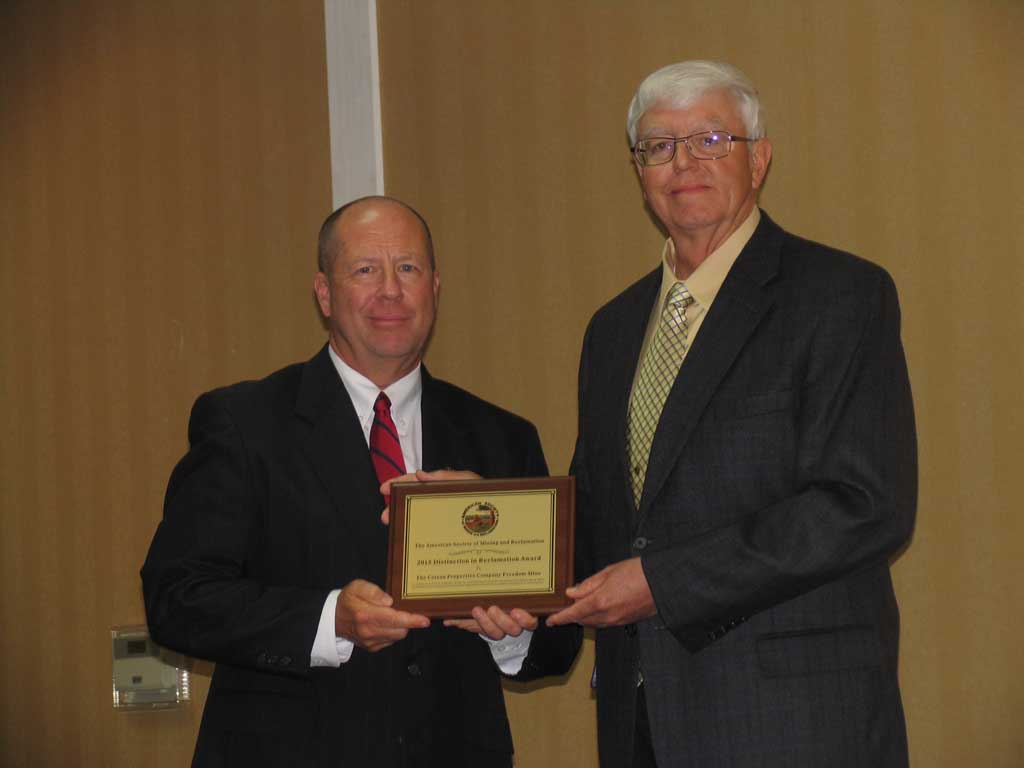
Distinction in Reclamation Award
This award recognizes a specific project in which a company has demonstrated excellence in reclamation design, implementation, and overall success, resulting in the conservation of natural resources and the ecosystem.
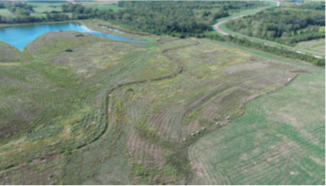
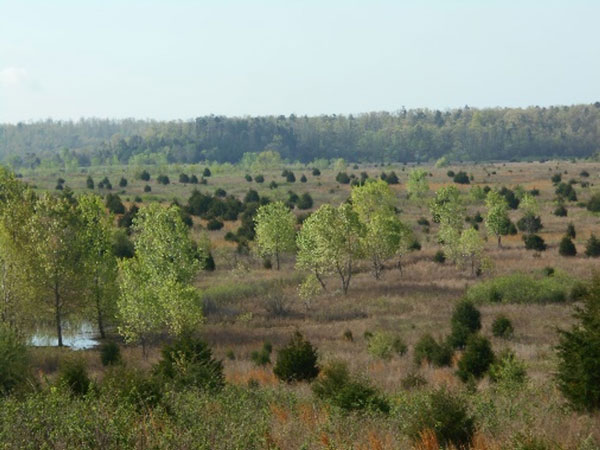
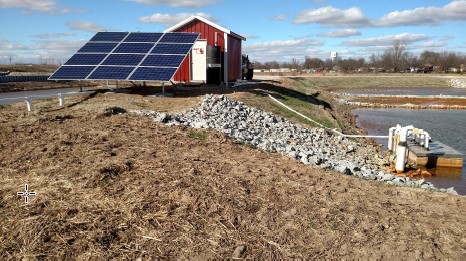
The Wild Boar Complex’s Big Creek Project
One of Peabody Energy’s core values is “We take responsibility for the environment, benefit our communities, and restore the land for generations that follow.” The Wild Boar Complex’s Big Creek Project is a prime example of this value in operations.
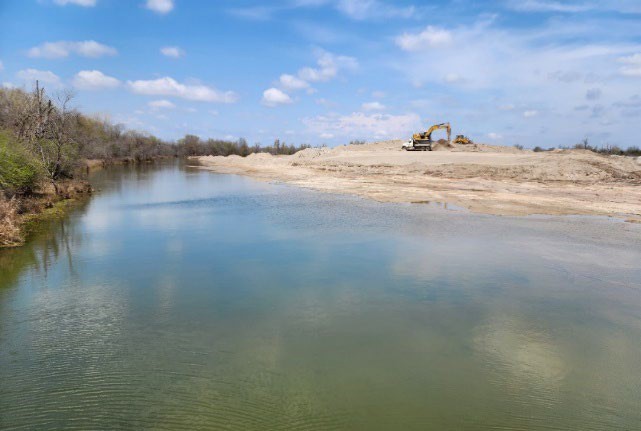
Big Creek is an intermittent stream on the eastern portion of the permit that becomes perennial by the time it leaves the project area. Prior to mining, the affected portion of the creek had a watershed of 28,960 acres and consisted of approximately 23,100 linear feet. It had little to no access to its floodplain and had been directly impacted by agriculture, pre–Surface Mining Control and Reclamation Act (SMCRA) mining, and post-SMCRA mining. Only 13 acres of jurisdictional wetlands were identified prior to mining, with only eight of those being natural.
The Big Creek Project was one that involved strategic coordination and critical timing. Two separate Army Corps of Engineers Section 404 permits governed its mining, mitigation, and replacement. Peabody Energy had to be conscious of all reclamation requirements as well as maintain channel flow during mining. Mining through Big Creek required not only the 1:1 replacement of each linear foot disturbed, but also enhancements to avoidance sections of the creek and restoration of part of the creek from a dredged ditch to a pre-existing paleochannel. The channel was first mined through in 2015, and water was put back through the 37,300 feet of completed and restored channel in 2024. The end product of mining is now a much more stable creek that can access its floodplain with higher ecological function overall than what was previously in place, showing that not only was the reclamation successful, but it also far exceeds what had been in place before Wild Boar and West 61’s mining began.